
Texas summers come with trade-offs. The hill country opens up, the lake is finally warm, the kids want to be outside until the sun goes down. And the wildlife that has been dormant through cooler months is now wide awake, sharing the same trails, backyards, and patios. Most encounters with snakes, scorpions, and fire ants end with nothing more than a startled jump and a story to tell later. But some of them end at the emergency room, and the difference between those two outcomes often comes down to recognizing what is actually happening in the first hour.
Here is what Texas families should know about the three most common venomous encounters in the state, and when a bite or sting genuinely warrants a trip in.
Rattlesnakes and Other Pit Vipers
Texas is home to four venomous snake species: the rattlesnake, the copperhead, the cottonmouth, and the coral snake. The first three are pit vipers, and they account for nearly all venomous bites in the state. According to the CDC, roughly 7,000 to 8,000 people are bitten by venomous snakes in the United States every year, and about five of those bites prove fatal. The Texas Department of State Health Services reports that one to two of those deaths happen in Texas annually, which puts the actual fatality rate well under one percent of bites.
The reassuring part of that statistic comes with context worth understanding. Texas DSHS notes that roughly half of all venomous snake bites are “dry,” meaning the snake struck defensively without injecting venom. That is genuinely good news in the moment. The harder truth is that there is no reliable way to know in the field whether a bite was dry or not, which is why every suspected venomous bite is treated as an emergency until proven otherwise.
Signs that venom has been injected typically appear within 30 to 60 minutes and include progressive swelling and bruising at the bite site, intense pain that worsens rather than fades, nausea, weakness, a metallic taste in the mouth, or tingling around the lips and face. The CDC reports that 10 to 44 percent of rattlesnake bite victims experience lasting injury, including permanent loss of function in a finger or limb, and that risk drops significantly with prompt antivenom treatment.
What to do, briefly: get away from the snake, keep the bitten limb still and roughly at heart level, remove rings and watches before swelling sets in, and head to the nearest emergency room. Skip the old advice about tourniquets, ice, suction, and cutting. None of it helps, and most of it makes outcomes worse.

Fire Ants
Fire ants are the most common cause of allergic reactions to stinging insects in Texas, according to the Texas Allergy, Asthma and Immunology Society. The classic fire ant sting produces a burning sensation followed by a raised bump that develops into a sterile, fluid-filled pustule within 24 hours. That pustule is uncomfortable and itchy, but on its own it is not an emergency.
The emergency is anaphylaxis. TAAIS reports that severe systemic allergic reactions occur in 1 to 6 percent of people stung by fire ants, and these reactions can be fatal. The warning signs are not subtle:
- Difficulty breathing, wheezing, or tightness in the throat that appears within minutes of being stung anywhere on the body.
- Hives, flushing, or swelling that spreads beyond the sting site, particularly to the face, lips, or tongue.
- Dizziness, fainting, rapid heartbeat, or a sudden drop in blood pressure, often accompanied by nausea or confusion.
Anyone showing those signs after a fire ant encounter needs emergency care immediately, and 911 is the right call if symptoms are progressing quickly. Someone with a known fire ant allergy and a prescribed epinephrine auto-injector should use it first, then come in. Epinephrine buys time. It does not replace evaluation.
Scorpions
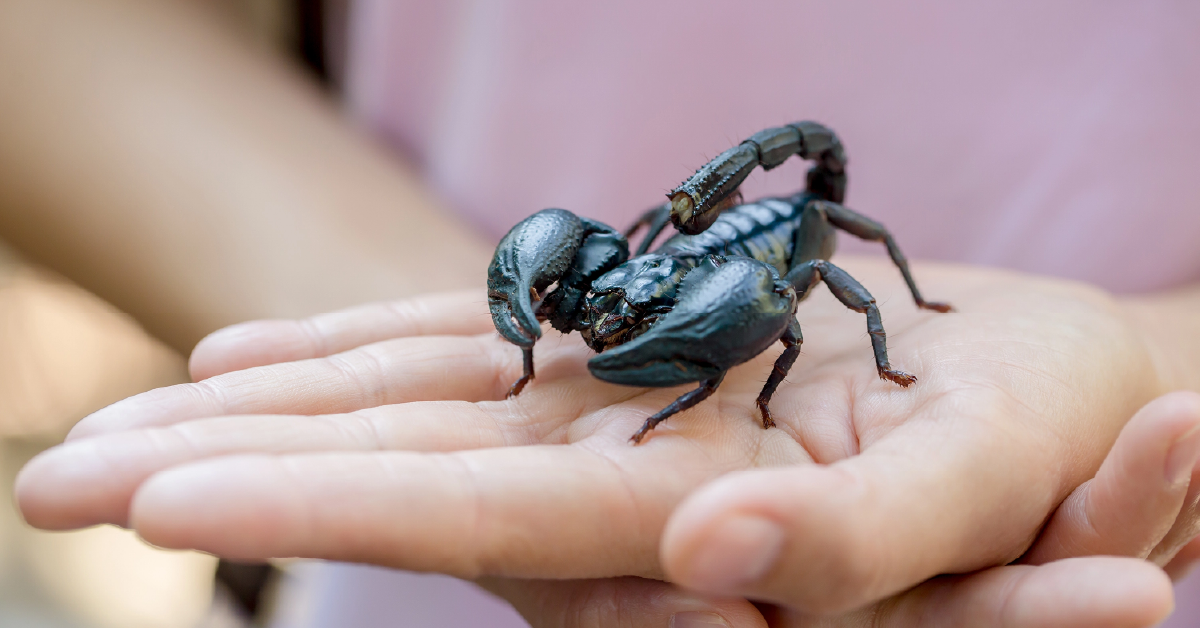
The scorpion most Texans encounter is the striped bark scorpion, Centruroides vittatus. It is not the same species as the Arizona bark scorpion, which carries significantly more dangerous venom. A striped bark scorpion sting hurts considerably and can cause localized swelling, numbness, and tingling that lingers for up to 72 hours, but for most healthy adults it is not life-threatening.
The Cleveland Clinic notes that fewer than 5 percent of scorpion stings in the United States require medical attention. The cases that do tend to fall into two categories: allergic reactions, which look the same as the anaphylaxis described above, and stings in young children, older adults, or people with underlying cardiac or respiratory conditions, where symptoms can escalate unexpectedly.
Watch for muscle twitching, difficulty swallowing, blurred vision, drooling, or restlessness that seems out of proportion to the injury, especially in children. Those are signs the nervous system is being affected and warrant evaluation.
When to Come In
Any suspected venomous snake bite is an emergency, full stop. Any sting followed by breathing changes, widespread hives, swelling beyond the site, or symptoms that seem out of proportion to the injury is an emergency. Any sting in a young child where something feels off, even if it is hard to articulate, is worth a look. Parents know their kids. That instinct is usually right.
At Surepoint Emergency Centers across Texas, the team handles bites and stings throughout the warm months, with on-site imaging and lab work that means evaluation, monitoring, and treatment all happen in one place without referrals or transfers. Doors are open 24 hours a day, seven days a week, including the long summer holidays when these encounters tend to spike. If something happened outside today and the symptoms are starting to worry someone at home, come in. Most visits end with reassurance. The ones that need more are exactly the ones where being early matters.
If you are experiencing a medical emergency, call 911 or visit your nearest emergency room immediately. This post is for informational purposes only and does not replace guidance from your healthcare provider. Sources: Centers for Disease Control and Prevention (https://www.cdc.gov/niosh/outdoor-workers/about/venomous-snakes.html), Texas Department of State Health Services (https://www.dshs.texas.gov/animal-safety-zoonosis/animal-bites/zcb-venom/snake), Texas Allergy, Asthma and Immunology Society (https://taais.org/fire-ants/), StatPearls via the National Library of Medicine (https://www.ncbi.nlm.nih.gov/books/NBK470576/), and Cleveland Clinic (https://my.clevelandclinic.org/health/diseases/17860-scorpion-stings). Current as of June 2026.