
Medically reviewed by Dr. Damalia Wilson, MD, Board-Certified in Emergency Medicine, Surepoint Emergency Centers
Last reviewed: August 2026
Fiber spent decades as the least glamorous part of the nutrition label. Then social media turned it into a competition.
Now people are adding chia seeds to smoothies, lentils to salads, beans to breakfast, and psyllium powder to just about anything that will absorb it. Some track fiber as closely as protein, pushing their daily intake to 40, 50, or more grams in pursuit of better digestion, improved blood sugar, and a healthier gut.
It is called fibermaxxing, and the basic idea has more nutritional merit than many internet health trends these days. Most adults do not eat enough fiber.
But fiber has physical properties that matter. It resists digestion, absorbs water, ferments inside the colon, and adds bulk to stool. Those are the same qualities that make fiber beneficial. When someone adds very large amounts too quickly, takes concentrated supplements without enough liquid, or already has a narrowed or slow-moving digestive tract, those qualities can also contribute to real medical problems.
What Fibermaxxing Gets Right
Fiber is a type of carbohydrate found in plant foods. Soluble fiber attracts water and forms a gel-like material during digestion. It can slow digestion and help with cholesterol and blood sugar control. Insoluble fiber adds bulk to stool and helps material move through the digestive tract.
The Centers for Disease Control and Prevention reports that most U.S. adults consume only about half the fiber they need. Depending on age and sex, the National Institute of Diabetes and Digestive and Kidney Diseases recommends approximately 22 to 34 grams per day for adults. The standard Daily Value used on U.S. food labels is 28 grams.
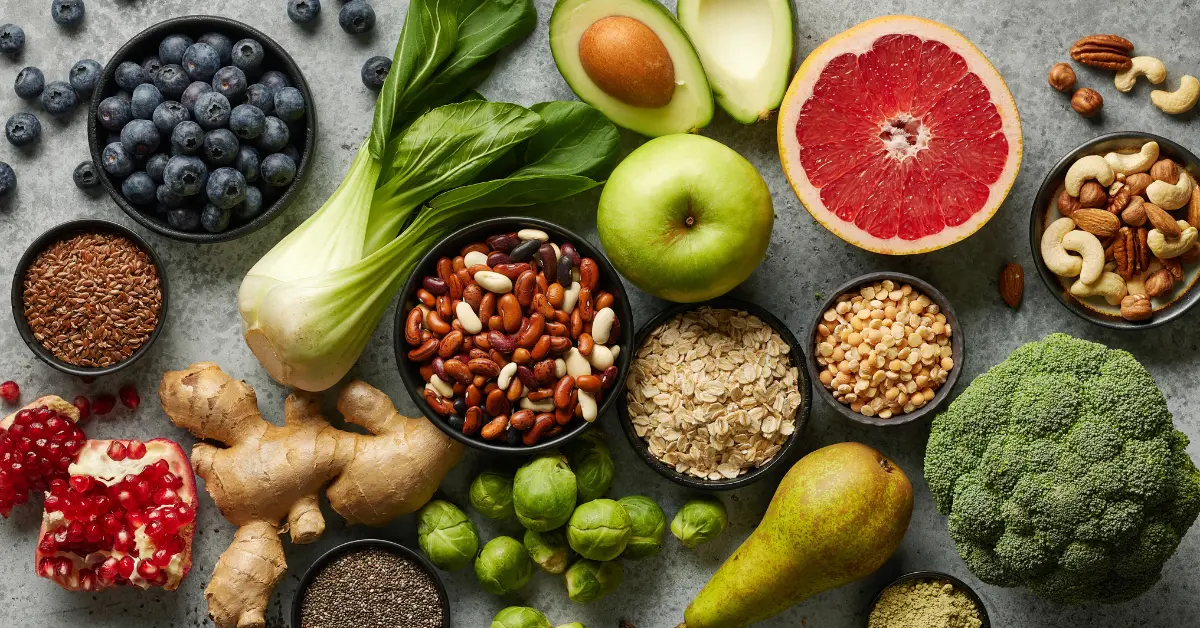
Increasing fiber toward those levels can support regular bowel movements and encourage people to eat more beans, vegetables, fruit, nuts, seeds, and whole grains. The problem is not that someone ate an extra serving of lentils. It is what can happen when a gradual nutritional improvement turns into a maximum-intake challenge.

What Excessive Fiber Can Actually Do
The first effects are usually gas, bloating, and cramping. Many fibers are fermented by bacteria in the colon, a process that produces gas. If fiber intake doubles or triples suddenly, gas production may increase faster than the digestive system can comfortably accommodate it. The abdomen can feel tight, distended, and painful. Some people also develop diarrhea as stool moves through the intestines more quickly.
Fiber can cause the opposite problem, too. Because it absorbs water and adds bulk, a large amount of fiber without enough fluid can create a bigger, harder mass of stool. Instead of relieving constipation, it can make stool more difficult to pass.
In rare cases, that progression can lead to fecal impaction, which occurs when a hard mass of stool becomes stuck in the rectum or colon. Medical literature includes reports of impaction and intestinal blockage after excessive dietary fiber intake. The risk is greater when the bowel is already narrowed, movement through the digestive tract is impaired, or concentrated fiber is consumed with too little liquid.
Bulk-forming supplements require particular care. Psyllium expands quickly when it contacts water. If swallowed dry or with too little fluid, it can swell in the throat or esophagus, causing choking or difficulty swallowing. The same expansion can contribute to an intestinal blockage in someone with an existing narrowing or obstruction. FDA labeling for psyllium products warns that taking the product without adequate liquid may block the throat or esophagus.
Persistent diarrhea creates a different medical concern. Losing water through repeated loose stools can lead to dehydration, particularly in Texas heat or when someone is also exercising heavily. Dizziness, weakness, a rapid heartbeat, and reduced urination suggest that the problem has moved beyond ordinary digestive adjustment.
Very high fiber intake can also affect how some medications are absorbed. Bulk-forming fiber may reduce or delay absorption when taken too close to certain prescription drugs. Over time, extreme intake may interfere with the absorption of minerals such as iron, zinc, magnesium, and calcium, although this is less likely in someone eating a varied, balanced diet.

Some People Should Be More Cautious
Most healthy adults can increase fiber safely when they do it gradually. The risk changes for people who have difficulty swallowing, chronic severe constipation, Crohn’s disease, a previous intestinal blockage, a narrowed area of the digestive tract, or a history of certain abdominal surgeries.
Fiber may not be appropriate during every digestive illness, either. Someone with an active inflammatory bowel disease flare or a suspected obstruction may be advised to temporarily reduce fiber rather than add more. A recommendation that is healthy for the general population may be wrong for a particular digestive condition.
In the emergency department, we regularly see patients with severe abdominal pain or vomiting who have already tried adding fiber or laxatives because they assumed the problem was simple constipation. Adding more bulk to an obstructed bowel does not solve the blockage and may make the symptoms worse.
When Symptoms Should Not Wait
Gas and mild bloating after adding fiber are common. Severe pain, repeated vomiting, and an inability to pass gas are not normal adjustment symptoms.
Seek immediate medical evaluation when you notice:
- Severe or steadily worsening abdominal pain with vomiting or visible abdominal swelling may indicate an impaction, obstruction, or another acute abdominal condition.
- An inability to pass stool or gas, particularly with cramping, vomiting, or a swollen abdomen, can signal an intestinal obstruction. A complete obstruction is a medical emergency.
- Chest pain, choking, difficulty swallowing, or trouble breathing after taking psyllium or another powdered fiber supplement requires immediate attention. Call 911 if breathing is affected.
- Persistent diarrhea or vomiting with dizziness, weakness, a rapid heartbeat, or very little urine may indicate significant dehydration.
- Blood in the stool, black stool, fainting, confusion, or severe weakness should not be attributed automatically to fiber, constipation, or a new diet.
If these symptoms are present, stop taking additional fiber or laxatives until the cause has been evaluated.
How to Increase Fiber Without Overdoing It
Start with the amount you currently eat, not the largest number appearing online. Add fiber a little at a time and give the digestive system a chance to adjust before increasing it again.
Choose a variety of foods instead of relying on one concentrated source. Beans, oats, vegetables, fruits, nuts, seeds, and whole grains provide different types of fiber along with other nutrients. Supplements may help close a gap, but they should be measured carefully, mixed exactly as directed, and taken with the full amount of liquid listed on the label.
Hydration needs vary with body size, medications, health conditions, physical activity, and the Texas heat. People who have been told to limit fluids because of heart or kidney disease should ask their healthcare provider how to balance that restriction with fiber intake.
Fibermaxxing can be a useful reminder to improve a low-fiber diet. It should not become a race to see how much bulk the digestive system can handle.
At Surepoint Emergency Centers across Texas, emergency-trained physicians are available 24/7 when abdominal symptoms cannot wait. With on-site laboratory testing and imaging, the team can distinguish routine constipation from dehydration, fecal impaction, intestinal obstruction, and other causes of severe abdominal pain all inhouse.
Dr. Damalia Wilson, MD, is a board-certified emergency medicine physician and Medical Direction at Surepoint Emergency Centers.
If you are experiencing a medical emergency, call 911 or visit your nearest emergency room immediately. This post is for informational purposes only and does not replace guidance from your healthcare provider. Sources include the Centers for Disease Control and Prevention, https://www.cdc.gov/diabetes/healthy-eating/fiber-helps-diabetes.html; National Institute of Diabetes and Digestive and Kidney Diseases, https://www.niddk.nih.gov/health-information/digestive-diseases/constipation/eating-diet-nutrition; U.S. Food and Drug Administration, https://www.fda.gov/files/food/published/DV-Percent-DV-Nutrition-Facts-Label_09072023.pdf; National Library of Medicine MedlinePlus, https://medlineplus.gov/druginfo/meds/a601104.html and https://medlineplus.gov/intestinalobstruction.html; Mayo Clinic, https://www.mayoclinic.org/healthy-lifestyle/nutrition-and-healthy-eating/expert-answers/fiber-supplements/faq-20058513; and the Journal of Clinical and Translational Research, https://doi.org/10.18053/jctres.09.202301.006. Current as of August 2026.