
Medically reviewed by Michael Bailey, DO, Board Certified in Family Medicine, Surepoint Emergency Centers
Last reviewed: October 2026
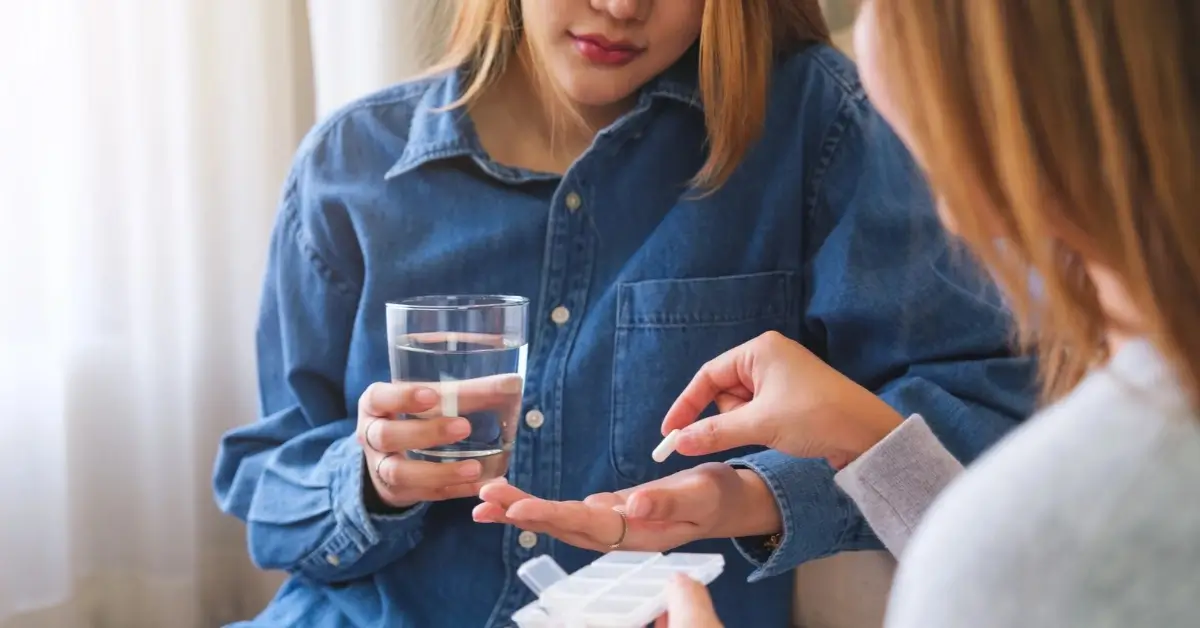
Someone at the table mentions they have not slept well in days, and someone else reaches into a bag and offers a pill from their own prescription. It happens in kitchens and living rooms all through the holidays, and it feels like kindness, not risk.
The challenge is that a shared pill can sometimes lead to an emergency room visit, because the dose is not appropriate for the person taking it, it interacts with other medications they are on, or they have an adverse reaction. The easiest way to prevent it is to clear unused prescriptions out of the house. Our guide, Clear Out the Cabinet Before Take Back Day on October 24, walks through how. Here is why it matters.
It Is More Ordinary Than It Looks
Handing someone a pill from your own prescription is not a fringe behavior. In 2024, about 8 million Americans age 12 and older misused a prescription pain reliever, meaning they used it in a way a doctor did not direct, such as taking someone else’s prescription or taking more than prescribed. Another 4.6 million misused a prescription sedative or tranquilizer, according to SAMHSA’s 2024 National Survey on Drug Use and Health. Among people who misused a pain reliever, 42.3 percent got it from a friend or relative the last time, most often for free. Only about 1 in 13 bought it from a dealer or stranger.
The motive is rarely to get high. Seven in ten people who misused a pain reliever said the main reason was to relieve physical pain. A 2024 systematic review in the British Journal of General Practice found pain relievers were the most commonly shared medicines in every study it examined, followed by antibiotics and allergy medicines. Sharing tended to happen when people could not get to a doctor quickly or had run out of their own medication.
Most of the people behind those numbers are not reckless. They are generous with something that was never meant to be shared, and that generosity is exactly why the habit is so common and so easy to miss.
Why It Shows Up in the ER
A CDC-led study in JAMA, based on 2017 to 2019 data, estimated roughly 6 emergency visits per 1,000 Americans each year for harms from medications, whether the medicine was taken as prescribed, without a prescription, or by accident.
More recent poison center data points the same direction. In 2024, pain relievers, both prescription and over-the-counter, were the most common substance involved in adult exposures reported to U.S. poison centers, appearing in more than 132,000 of them, according to national poison center data. About a third of all exposures that year needed care beyond home monitoring.
A prescription comes with built-in safety checks: a prescriber who reviewed your other medications, a pharmacist who screened for interactions, and a label written for your body. A shared pill skips all three.
One Dose, Two Different Bodies
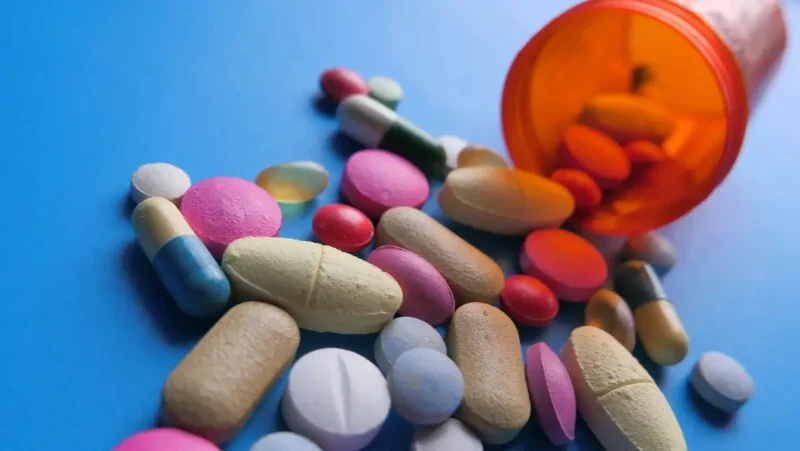
Ambien is a useful example of why “it worked for me” is not the same thing as a prescription. In 2013, the FDA lowered the recommended dose of zolpidem, the active ingredient in Ambien, after driving and laboratory studies showed that blood levels the next morning could be high enough to impair activities like driving. Women clear zolpidem from their bodies more slowly than men, so the FDA set a lower starting dose for women. That labeling is still in effect today.
In 2019, the FDA added a Boxed Warning, its most prominent label warning, to zolpidem and two similar sleep medicines after reviewing 66 cases of sleepwalking, sleep-driving, and other activities done while not fully awake. Twenty of those cases ended in death. The agency noted these behaviors can happen at the lowest recommended dose, after just one dose, and with or without alcohol. A borrowed pill carries the same risk, without anyone having checked whether it was a good fit in the first place.
Leftover Pills, Leftover Antibiotics
Pain medication follows a similar pattern, for a reason that is almost sympathetic. Someone has surgery or a dental procedure, feels better before the bottle is empty, and keeps the rest “just in case.” Months later, a relative throws out their back over Thanksgiving weekend, and the leftover bottle comes out.
A prescriber weighs a pain medication dose against a patient’s weight, age, kidney and liver function, and whatever else is already in their system. Someone on a blood thinner, a sleep aid, or an anti-anxiety medication can react very differently to the same pill. None of that context travels with the pill once it changes hands.
Antibiotics, the second most commonly shared type of medicine in the BJGP review, carry their own problems. Many holiday illnesses, like colds, flu, and most sore throats, are caused by viruses, which antibiotics do not treat. A leftover partial course may be the wrong drug, the wrong dose, or too little to clear a bacterial infection, and it can trigger an allergic reaction in someone who has never taken it before. Taking antibiotics when they are not needed also contributes to antibiotic resistance, which makes future infections harder to treat.
College Students Home for the Break
Prescription stimulants for ADHD, like Adderall and Ritalin, are another commonly shared medication, especially among teens and young adults. About 3.9 million Americans misused a prescription stimulant in 2024, according to the 2024 NSDUH. In 2023, the FDA updated the Boxed Warning on every prescription stimulant, noting that most people who misuse them get them from family members or peers, and adding plain instructions that patients should never share them.
For someone without a prescription, a stimulant can raise heart rate and blood pressure, cause anxiety or agitation, and, rarely, trigger heart rhythm problems. Energy drinks, other stimulants, or alcohol can make those effects harder to predict. If a college student is home and mentions borrowing a friend’s pills to get through finals, it is worth a calm conversation.
Alcohol Changes the Math
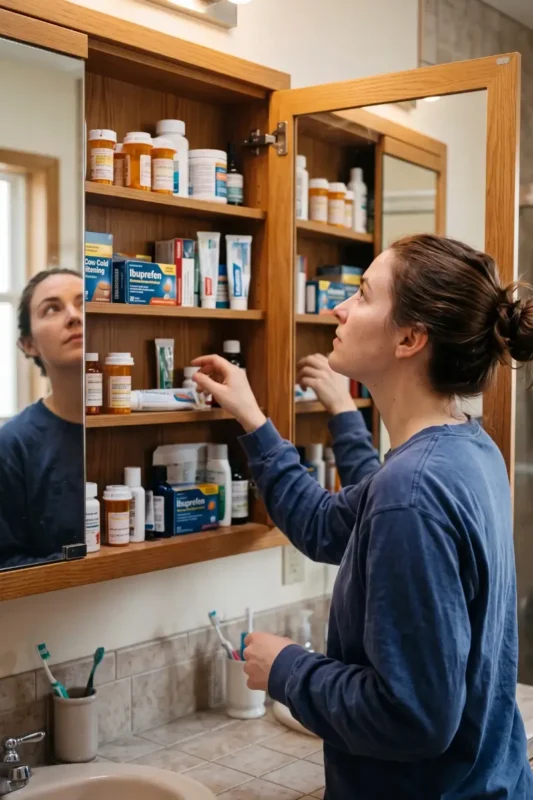
Sleep aids, anti-anxiety medications like Xanax and Valium, muscle relaxers, and opioid pain relievers all slow the central nervous system. So does alcohol. According to the National Institute on Alcohol Abuse and Alcoholism, combining them can cause excessive sedation and slowed or impaired breathing, and the effects can be fatal.
A holiday dinner with wine already poured is a common setting for a borrowed pill to meet something it was never evaluated alongside. The person offering the pill usually has no idea how much the other person has had to drink, and the person taking it may not think to mention it.
Signs This Isn’t Something to Wait Out
- Confusion, slurred speech, or unusual drowsiness after a shared medication: treat it as an emergency, especially with alcohol involved.
- Trouble breathing, bluish lips, or someone who will not wake up: call 911. This combination can point to a sedative or opioid overdose. If naloxone is available, give it.
- Chest pain, a racing or irregular heartbeat, or severe agitation after a borrowed stimulant: get emergency care.
- Hives, facial swelling, or wheezing after a borrowed antibiotic or other medication: call 911 if breathing is affected. These can be signs of a serious allergic reaction.
- Sleepwalking, sleep-driving, or anything someone does not remember after a sleep aid: stop the medication and call a physician.
- Anything that feels wrong, even without a clean label for it: call the Texas Poison Center Network at 1-800-222-1222. It is free, confidential, and takes a few minutes, and it is the lower-risk option every time.
What to Do Instead
Bring your own medication when you travel, in its original container. If something gets left behind, a phone call to a pharmacist usually solves it faster than borrowing from someone else’s supply, and in many cases a pharmacist can provide a short emergency supply. In Texas, a pharmacist can often provide an emergency supply of up to 72 hours, though this does not apply to Schedule II medications like most opioid pain relievers and ADHD stimulants.
If someone at the table is fishing around for something to help them sleep, calm down, or manage pain, that is worth an actual conversation instead of a pill passed under the table. It is also a low-key way to find out whether a borrowed dose would just be papering over something else going on.
And if you have leftover prescriptions at home, clear them out. Drop boxes at many Texas pharmacies take them year-round, and our guide, Clear Out the Cabinet Before Take Back Day on October 24, covers every option.
Surepoint Emergency Centers keeps physicians on-site around the clock across Texas, with lab work and imaging available in the same visit, for the nights when a phone call is not enough.
Michael Bailey, DO is a board-certified emergency medicine physician and Medical Director at Surepoint Emergency Center in Azle, TX. He has 28 years of experience in emergency medicine across Texas.
If you are experiencing a medical emergency, call 911 or visit your nearest emergency room immediately. This post is for informational purposes only and does not replace guidance from your healthcare provider.
Sources include: Substance Abuse and Mental Health Services Administration, Key Substance Use and Mental Health Indicators in the United States: Results from the 2024 NSDUH; British Journal of General Practice, Understanding non-recreational prescription medication-sharing behaviours: a systematic review (2024); JAMA, US Emergency Department Visits Attributed to Medication Harms, 2017-2019 (2021); Poison Control, National Poison Center Statistics, 2024; U.S. Food and Drug Administration, Zolpidem dosing (2013), Boxed Warning for complex sleep behaviors (2019), and Updated warnings for prescription stimulants (2023); National Institute on Alcohol Abuse and Alcoholism, Alcohol-Medication Interactions; Texas Occupations Code, Section 562.054, Emergency Refills; Texas Poison Center Network, poisoncontrol.org. Current as of October 2026.