
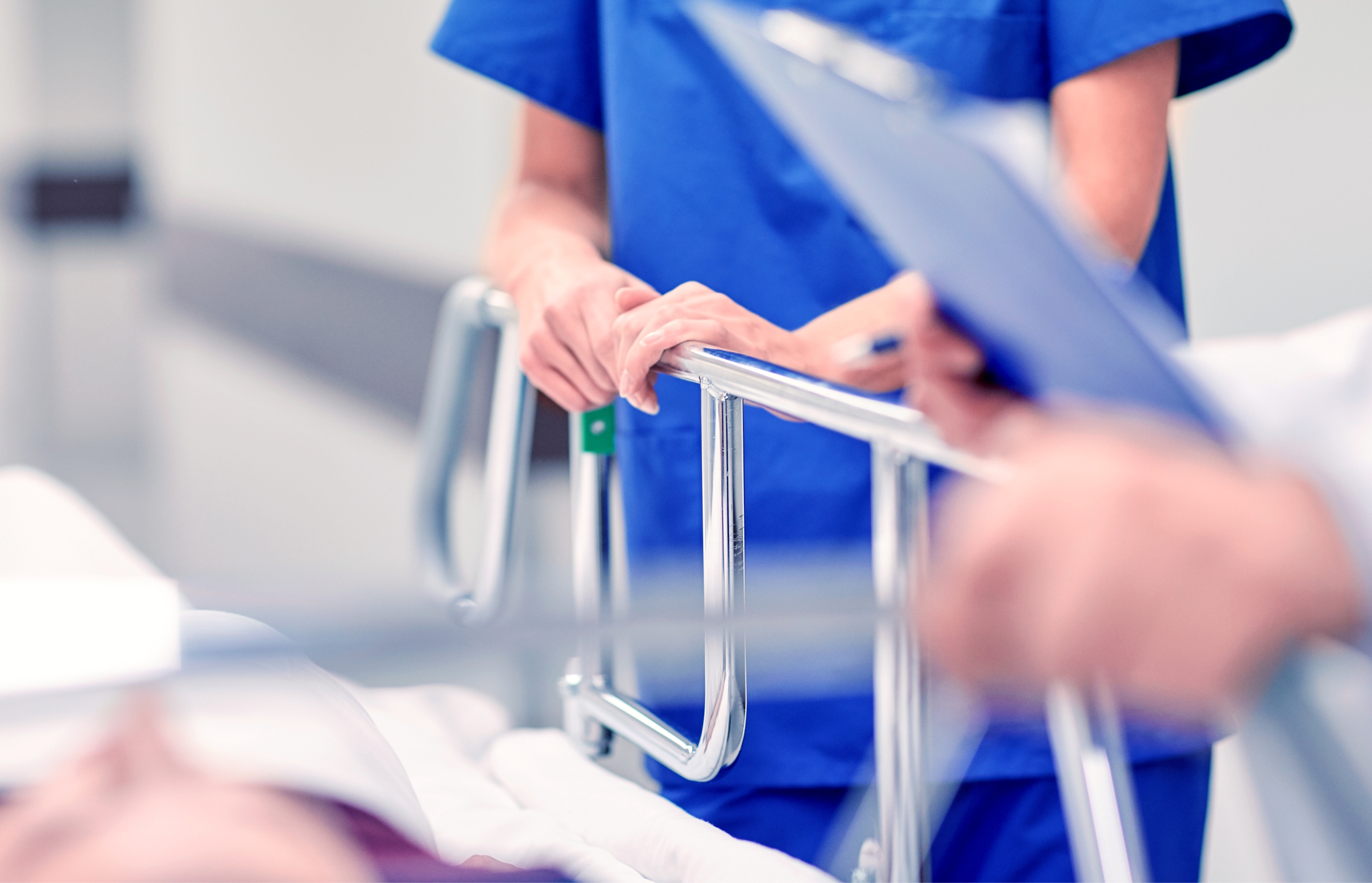
There is a version of emergency medicine that most people never see. Not the waiting room, not the discharge paperwork, not the moment someone finally explains what went wrong and what happens next. The part that stays hidden is the first five minutes after a critical patient arrives: before the family has been updated, sometimes before anyone in the room has had a chance to take a breath.
It rarely looks the way people imagine. It is quieter than television makes it seem, more deliberate, and in a well run emergency center it unfolds with a precision that takes years to build.
This is what those five minutes actually look like.
The Room Is Ready Before the Patient Is
In many cases the room is set before the patient ever reaches the door. A call comes in, or EMS radios ahead with details relayed from the field. Roles get assigned. Equipment is checked and positioned. The team already knows who will manage the airway, who will obtain access, who will track vitals, and who will document in real time.
This kind of pre-assignment is not bureaucracy. It is the difference between a team that thinks clearly under pressure and one that has to work out who does what while the clock is running. The American College of Surgeons’ Advanced Trauma Life Support framework, which forms the backbone of trauma training across the country, ties pre-assigned team roles to faster assessment and fewer missed clinical findings.
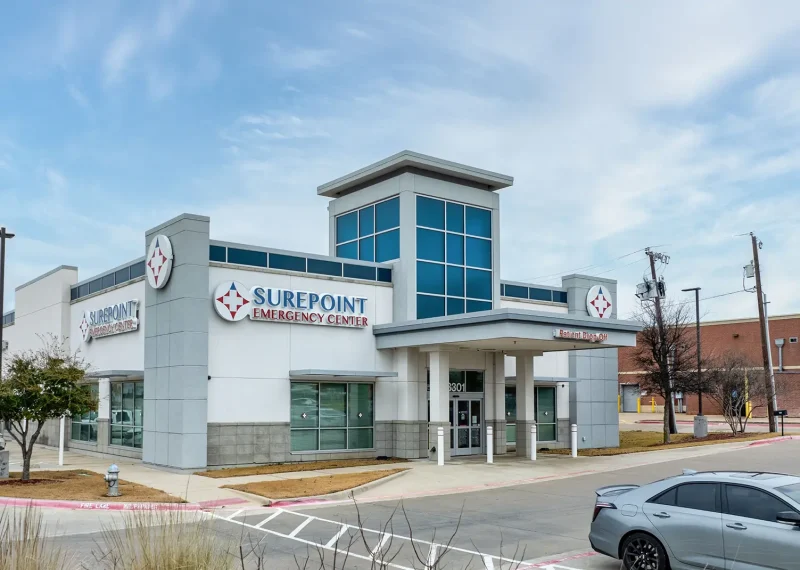
At Surepoint, that readiness is built into the physical space. The crash cart, the IV supplies, the airway kit, the monitors: none of it is searched for in the moment, because all of it is already where it needs to be. The room is ready. The team is ready. The patient arrives.
The First Two Minutes
The primary survey begins immediately. Emergency medicine follows a sequence, airway, breathing, circulation, neurological status, and it follows that sequence in the same order every single time. Not out of habit, but out of clinical logic. A compromised airway kills faster than a circulation problem. A circulation problem kills faster than a neurological change. The order reflects a hierarchy of urgency, so working through it systematically means the most immediately life-threatening issue is always found first, no matter what else is happening in the room.
While one clinician moves through the primary survey, the rest of the team is already in motion alongside them. Vascular access is being obtained. Vitals are measured and called out. Labs are drawn. When imaging is required, patients don’t have to leave the facility or wait for results from another provider. Surepoint’s on-site radiology and laboratory services allow testing to begin quickly and results to be reviewed by the care team in real time, helping accelerate diagnosis and treatment.
According to triage performance data published in Emergency Physicians Monthly, drawn from a review of more than 32,000 patients, 98% of triage assessments are completed in under five minutes. In the best performing centers, the primary assessment is closer to two. That pace is not urgency for its own sake. It is what happens when a team has done this enough times that each step flows into the next without hesitation.
The Language of the Room
One of the things that strikes first time observers is how the team talks. Information moves fast, but it moves in a specific shape. Findings are called out clearly and acknowledged. Orders are confirmed back to the person who gave them. Numbers are stated precisely. Nobody assumes anyone else heard something; everything that matters is said out loud and confirmed.
This is called closed loop communication, and it exists because in a loud, high stakes environment, assumptions are where errors start. When a nurse repeats a medication dose back to the physician before giving it, that is not redundancy. That is the system working exactly as designed.
The calm in the room is not detachment. It is concentration. Every person is tracking several things at once, the patient, the monitors, the team, the shifting clinical picture, and the way they communicate is what keeps all of those threads from tangling.
Minutes Three Through Five
By the time the primary survey is complete, the team already has a working diagnosis, or at least a differential: a short list of what this could be and what each possibility would require. Treatment has often started before that list is fully narrowed. Oxygen is flowing. An IV is in. Pain is being addressed. The patient is monitored continuously.
Then the secondary survey begins, moving more thoroughly through the body now that the immediate threats to life have been handled. History is gathered in detail. The picture that started as a rapid sketch in the first sixty seconds is filled in with specificity. If a continual care following stabilization is needed, Surepoint can admit directly to area hospitals and arrange transport by private ambulance.
What unfolds in five minutes would take most people five paragraphs to describe. To the team, it is simply the beginning of the shift.
What Builds This
None of it is accidental. The precision of those first five minutes is the product of training, repetition, and a culture that takes preparation as seriously as response. Emergency medicine is one of the few fields where the work itself cannot always be rehearsed in real conditions, so it is drilled, simulated, and reviewed until the sequence becomes reflex.
It also runs on proximity. When the triage nurse, the physician, and the trauma room are only steps apart, that closeness turns directly into faster care. And it runs on temperament: calm under pressure, focused on the patient, free of ego in the moment.
Ready And Waiting
Most visits to Surepoint are not trauma activations. They are broken bones and chest pain, lacerations and fevers, the kind of abdominal pain that needs an answer tonight. But the same readiness that handles those everyday visits is what makes the rare critical one possible. A team that is ready. A room that is staged. A sequence practiced until it runs on its own.
At Surepoint Emergency Centers across Texas, that preparation is the baseline. We are ready when it counts.
If you are experiencing a medical emergency, call 911 or go to your nearest emergency room immediately. This piece is for informational purposes only and does not replace guidance from your healthcare provider. Clinical information drawn from the American College of Surgeons Advanced Trauma Life Support framework (facs.org), StatPearls Emergency Department Triage (ncbi.nlm.nih.gov/books/NBK557583), and Emergency Physicians Monthly triage performance data (epmonthly.com). Current as of 2026.
Surepoint Emergency Center provides full emergency care 24/7 across 13 locations in North and South Texas. No appointment needed.