

Most people who take a hard hit to the head go through the same sequence. A moment of disorientation, maybe some stars, and then a gradual return to feeling more or less normal. And because they feel okay, they assume they are okay.
In most cases, that’s true. According to the CDC, approximately 75% of all traumatic brain injuries are mild, and most people recover fully with appropriate rest. But the brain is doing something in the hours after an impact that isn’t visible from the outside, and the 24 hours following a significant hit carry a level of significance that most people don’t fully appreciate.
What’s Actually Happening Inside
When the brain takes a sudden impact, it moves inside the skull. That movement disrupts the delicate electrical and chemical environment that brain cells depend on to function. This is what a concussion is at the cellular level: not a bruise in the traditional sense, but a disruption to the brain’s normal chemistry.
What makes it different from most injuries is what happens next. According to CDC research published through the National Center for Injury Prevention and Control, a complex biological cascade begins immediately after trauma and can continue for hours to weeks. Blood flow to affected areas may be altered. Inflammation builds gradually. Brain cells stressed by the initial impact may continue to struggle in ways that aren’t immediately apparent to the person who was injured or to anyone watching them.
This is why a person can hold a coherent conversation thirty minutes after a head injury and wake up the next morning feeling significantly worse. The injury hasn’t necessarily progressed dramatically. The brain has simply been working through a process that takes time to fully declare itself.
In some cases, particularly when there is bleeding in or around the brain, that process is more urgent. Pressure can build gradually inside the skull before becoming serious enough to cause visible symptoms. A person can seem fine, feel fine, and even insist they’re fine while that process is quietly underway. It is the core reason that feeling okay after a head injury is reassuring, but it isn’t the whole story.
The Scale of the Problem
Head injuries are far more common than most people realize. The CDC reports that traumatic brain injuries account for approximately 2.8 million emergency department visits, hospitalizations, and deaths in the United States each year, the equivalent of more than 586 hospitalizations and 190 deaths every single day. Falls are the leading cause, followed by being struck by or against an object, and motor vehicle crashes. Children, adolescents, and adults over 75 face the highest risk.
Those numbers include the full spectrum, from the most severe injuries to the mild concussions that make up the majority of cases. The point isn’t alarm. It’s perspective. Head injuries are common enough that most families will encounter one and knowing how the hours after an injury unfold is genuinely useful information.
What to Watch For
Mild symptoms in the immediate aftermath of a head injury, such as a dull headache, some fogginess, light sensitivity, or feeling off, are common and expected. They don’t automatically mean something serious is happening.
What matters most is the direction those symptoms are moving. According to CDC concussion guidance, symptoms improving over time are generally a good sign. The ones worth watching closely are those that shift in the wrong direction:
- A headache that was manageable and is now intensifying
- Nausea that progresses to repeated vomiting
- Confusion that deepens rather than clears
- Unusual drowsiness or difficulty staying awake
- Growing sensitivity to light or noise
- Feeling more off as time passes rather than less
These shifts in trajectory are the signal worth paying attention to. A single mild symptom that holds steady is very different from a symptom that is building.
For parents watching a child after a head injury, the challenge is that young children often can’t articulate what they’re experiencing. Unusual fussiness, loss of interest in things they normally enjoy, difficulty being consoled, or changes in sleep behavior can all be signs worth taking seriously even when a child can’t point to their head and say it hurts.
About the Sleep Question
Almost everyone has heard it: don’t let them fall asleep after a head injury. It’s one of the most persistent pieces of first aid folklore out there, and it’s worth setting straight.
The guidance has changed. According to the American Academy of Family Physicians, BrainLine, and multiple major medical centers, it is not necessary to keep someone awake after a concussion. The concern historically was that sleep would mask a dangerous deterioration in alertness, since before CT scanning was widely available, observing a person’s wakefulness was the only way to monitor for serious bleeding. That is no longer the situation.
Rest, including sleep, is now understood to be an essential part of brain recovery. Sleep allows the brain to heal without the demands placed on it during waking hours, and the first 24 to 48 hours are particularly important for that recovery process. Keeping an injured person awake out of fear is not only unnecessary, it may actually interfere with healing.
What does still matter is periodic checking. If someone with a head injury is sleeping, it’s reasonable to check on them every few hours to confirm they can be woken, are breathing normally, and aren’t showing new or worsening symptoms. That check takes seconds and provides genuine peace of mind. But it’s a monitoring step, not a reason to keep someone awake through the night.
If someone cannot be woken up, that is an emergency. Call 911.

The Role of Imaging
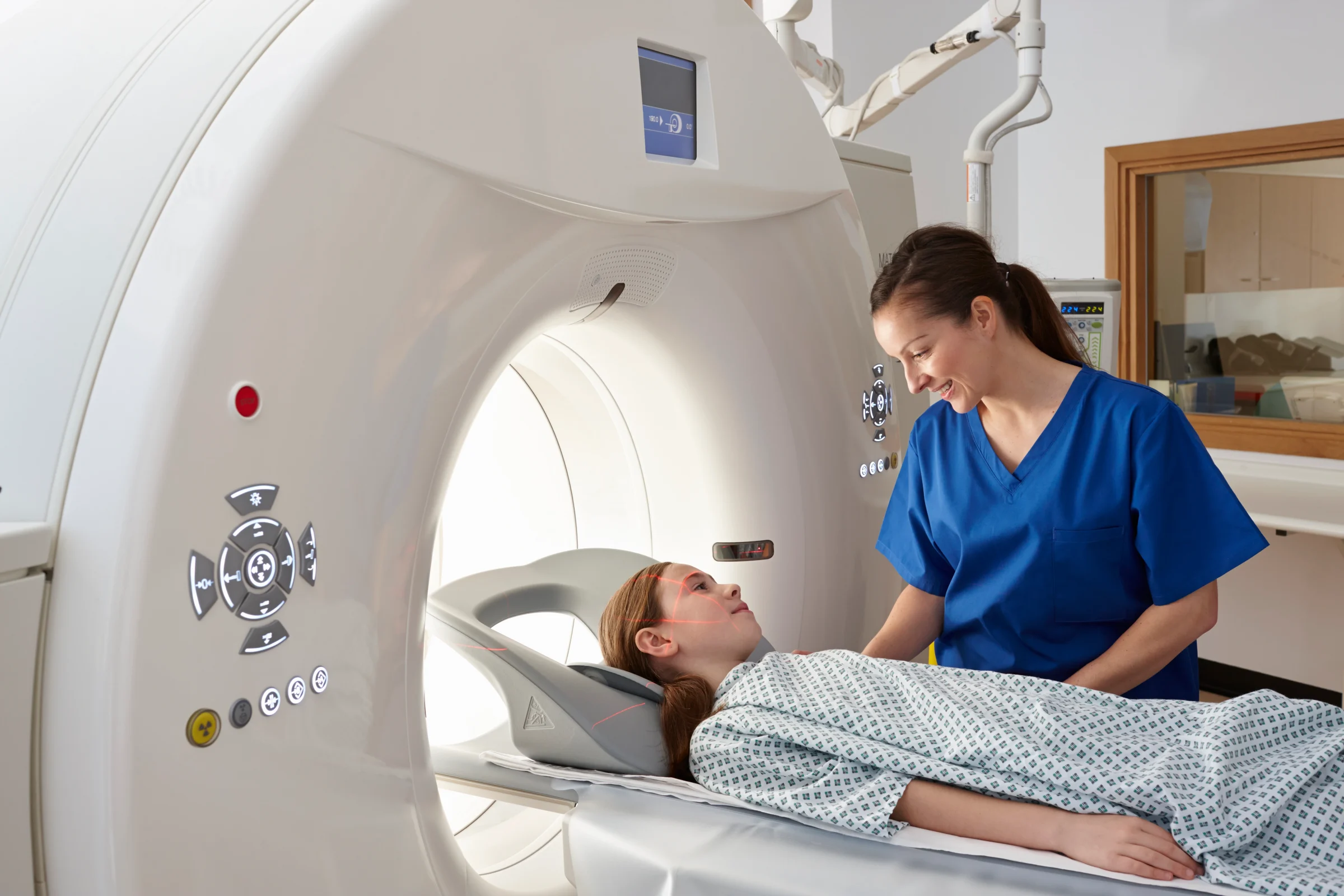
One of the most important things an emergency evaluation provides after a head injury is access to CT imaging when it’s warranted. A physical exam tells the care team a great deal, but it cannot see what’s happening beneath the surface of the skull. A CT scan can identify bleeding or pressure changes that haven’t yet produced obvious symptoms, findings that can change the course of treatment entirely.
Not every head injury requires a CT scan. The care team will assess the full clinical picture, including the mechanism of the injury, the symptoms present, and the neurological exam, to determine what’s appropriate. But having that capability on-site without a referral or a separate facility is exactly the kind of resource that matters when the 24-hour window is still open.
A Note for Athletes
For anyone returning to activity after a concussion, the CDC is clear: a second head injury before the brain has fully healed carries serious risk. The return to sport should be gradual, symptom-free, and guided by a provider. When in doubt, sit it out. That’s not overcaution. It’s the standard of care.
When to Come In
Some symptoms after a head injury belong in an emergency center, not on a waiting list. Come in or call 911 for any of the following: a headache that keeps getting worse and won’t level off, repeated vomiting, a seizure, one pupil noticeably larger than the other, extreme drowsiness or difficulty being woken up, slurred speech, weakness or loss of coordination, deepening confusion or unusual agitation, or any loss of consciousness after an initial period of seeming okay. That last scenario moves fastest. Don’t drive. Call 911.
At Surepoint Emergency Centers across Texas, the team evaluates head injuries every day. If someone you love took a significant hit and something feels off tonight, trust that instinct. Come in and let the team take a look. Most of the time, you’ll leave reassured. And when something does need attention, being there early is what makes the difference.
If you or someone with you is experiencing a medical emergency, call 911 or visit your nearest emergency room immediately. This post is for informational purposes only and does not replace guidance from your healthcare provider. Clinical information sourced from the CDC Traumatic Brain Injury Data (cdc.gov/traumatic-brain-injury), the CDC HEADS UP campaign (cdc.gov/headsup), the American Academy of Family Physicians (aafp.org), BrainLine (brainline.org), and the University of Rochester Medical Center (urmc.rochester.edu). Current as of March 2026.
Fact Check: The 24-Hour Window
CLAIM: “Approximately 75% of all traumatic brain injuries are mild.” Source: Harris, Kyle, et al. “Defining Mild Traumatic Brain Injury: From Research Definition to Clinical Practice.” Journal of Surgical Research, vol. 298, Apr. 2024, pp. 101–07. https://doi.org/10.1016/j.jss.2024.03.006.
CLAIM: “A complex biological cascade begins immediately after trauma and can continue for hours to weeks.” Source: CDC Grand Rounds. Reducing Severe Traumatic Brain Injury in the United States. Published in MMWR Supplements. URL: ncbi.nlm.nih.gov/pmc/articles/PMC4604943
CLAIM: “Traumatic brain injuries account for approximately 2.8 million emergency department visits, hospitalizations, and deaths in the United States each year — the equivalent of more than 586 hospitalizations and 190 deaths every single day.” Source: Connecticut, Brain Injury Alliance Of. “Facts and Statistics | Brain Injury Alliance of Connecticut.” Brain Injury Alliance of Connecticut, 25 Feb. 2025, biact.org/understanding-brain-injury/facts-statistics.
CLAIM: “Falls are the leading cause, followed by being struck by or against an object, and motor vehicle crashes.” Source: Connecticut, Brain Injury Alliance Of. “Facts and Statistics | Brain Injury Alliance of Connecticut.” Brain Injury Alliance of Connecticut, 25 Feb. 2025, biact.org/understanding-brain-injury/facts-statistics.
CLAIM: “Children, adolescents, and adults over 75 face the highest risk.” Source: Connecticut, Brain Injury Alliance Of. “Facts and Statistics | Brain Injury Alliance of Connecticut.” Brain Injury Alliance of Connecticut, 25 Feb. 2025, biact.org/understanding-brain-injury/facts-statistics.
CLAIM: “It is not necessary to keep someone awake after a concussion. Rest, including sleep, is now understood to be an essential part of brain recovery.”