
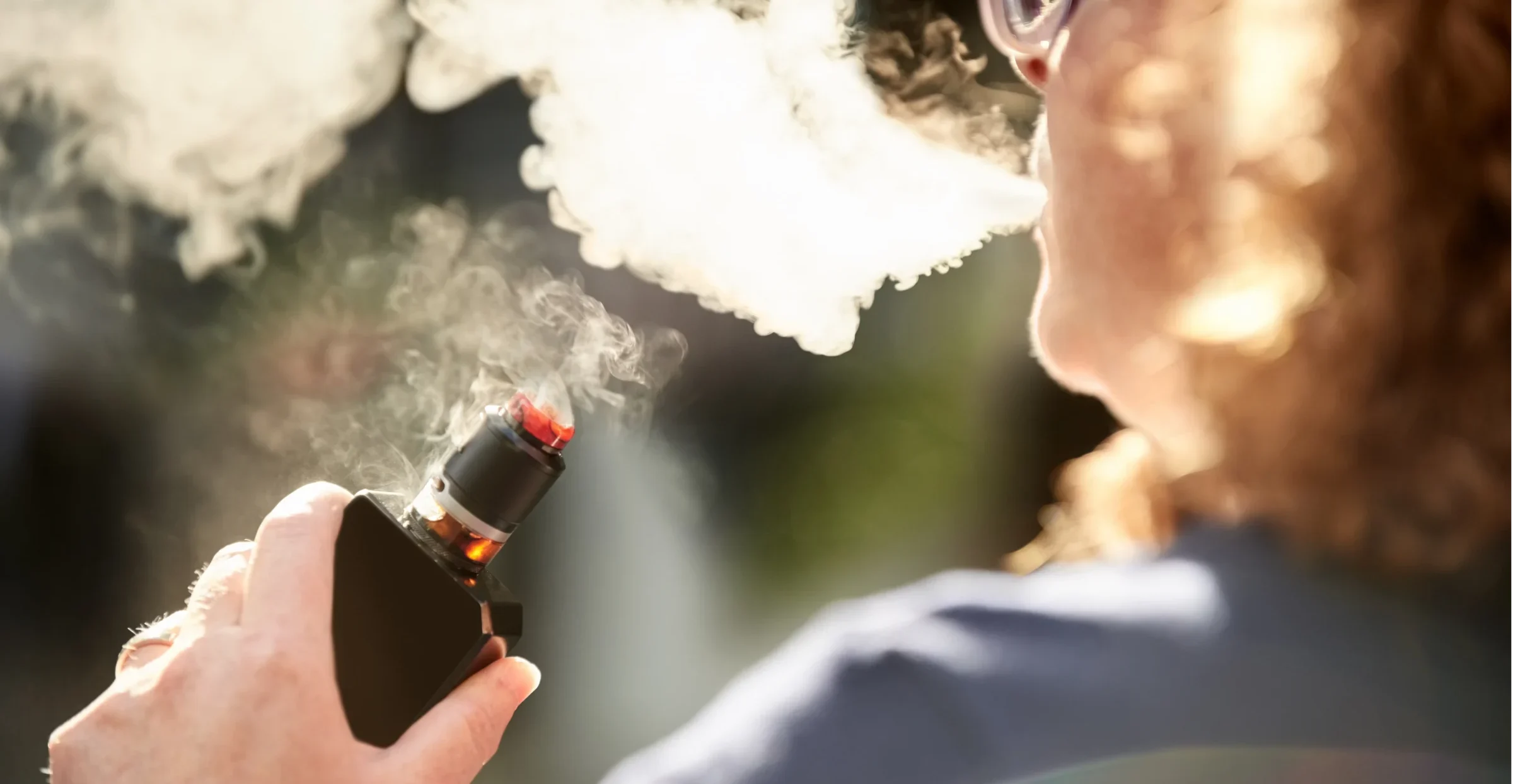
Vaping has become remarkably common among teens, young adults, and even older adults who turned to e-cigarettes as an alternative to traditional smoking. For many people, it feels like a safer choice. However, in 2019, hospitals across the U.S. reported a surge of serious vaping-associated lung injuries. These cases have a name: EVALI, which stands for e-cigarette or vaping product use-associated lung injury.
If you or someone you love vapes, understanding what EVALI looks like, and when it requires emergency care, could be one of the most important things you read today.
What Is EVALI?
EVALI is a serious lung condition caused by inhaling harmful substances found in vaping products. It was first formally identified during a major outbreak in 2019, when thousands of cases were reported across the United States. Vitamin E acetate, an additive found in many THC-containing vape products, was identified as a likely culprit in many cases. The honest truth is that the lungs were simply not designed to inhale the chemicals, flavorings, and aerosols found in e-cigarettes — and for some people, the damage can be severe.
EVALI can develop after only a short period of vaping, and it doesn’t only affect heavy users. Some cases have occurred in people who vaped occasionally or had only recently started.
Symptoms That Should Raise Concern
EVALI often develops gradually, which is part of what makes it dangerous. Symptoms can mimic a common respiratory illness, leading people to wait too long before seeking care.
Watch for a persistent cough that doesn’t improve or gets worse over days, shortness of breath, especially with activity or at rest, chest pain or tightness, fever, chills, or fatigue that feels out of proportion to a typical cold, nausea, vomiting, diarrhea, or abdominal pain alongside respiratory symptoms, and rapid or labored breathing.
Because these symptoms overlap with pneumonia, bronchitis, COVID-19, and other respiratory illnesses, EVALI is often missed or misdiagnosed in the early stages. If you or someone you know vapes and is experiencing any combination of these symptoms, that history is critical information for your care team.
When to Seek Emergency Care Immediately
Some presentations of EVALI are medical emergencies. Do not wait for a scheduled appointment if you or someone you love is experiencing any of the following.
- Severe shortness of breath or difficulty breathing at rest. When breathing becomes labored without physical exertion, the lungs may be significantly compromised. This requires immediate evaluation.
- Oxygen levels dropping or lips and fingertips turning bluish (cyanosis). If you have a pulse oximeter at home and your reading consistently falls below ~92%, seek care immediately. Visible bluish discoloration is a sign the body is not getting adequate oxygen and is a 911 situation.
- Rapid deterioration over hours. EVALI can progress quickly. If someone went from feeling unwell to struggling to breathe within a matter of hours, do not wait.
- High fever with severe respiratory symptoms. A high fever combined with difficulty breathing can indicate the lungs are significantly inflamed or that a secondary infection has developed on top of the lung injury.
- Confusion, altered mental status, or extreme fatigue. When the brain isn’t getting enough oxygen, cognitive changes can occur. This is a serious sign that requires emergency evaluation without delay.
Who Is Most at Risk
While EVALI can affect anyone who vapes, certain factors increase the likelihood of a serious outcome. Vaping products containing THC, particularly those obtained through informal or illicit sources, have been more strongly associated with severe cases. Young people whose lungs are still developing face particular risks. People with underlying asthma, COPD, or other respiratory conditions are also more vulnerable to rapid deterioration.
That said, no vaper is without risk. Cases have been documented across all age groups, product types, and usage patterns.
What EVALI Evaluation Looks Like
Because EVALI can look a lot like pneumonia or other respiratory illnesses, diagnosing it requires the full picture: symptoms, imaging, lab results, and patient history. That last piece is why disclosing vaping use to the care team is so important. Without it, the evaluation can easily go in the wrong direction, and the right treatment can be delayed.
Imaging is typically the first step. A chest X-ray and often a CT scan can reveal characteristic patterns of lung inflammation that point toward EVALI. Blood work helps assess how the body is responding and whether infection may be playing a role. Oxygen levels are monitored closely throughout the evaluation.
Testing for flu, COVID-19, or other respiratory infections is usually part of the workup as well, since EVALI and these conditions can look nearly identical. Ruling them out is an important part of arriving at the right diagnosis.
One of the advantages of being evaluated at a freestanding emergency center like Surepoint is that all of this happens under one roof. Imaging, labs, and physician evaluation are available on-site, which means there’s no sending patients out to a separate imaging center or waiting days for results to filter back through a primary care office. When EVALI is suspected, time and clarity matter. A complete workup in a single visit means leaving with real answers.
Trust Your Instincts
Breathing problems have a way of feeling scary, and that instinct is worth listening to. If something feels seriously wrong, not just a nagging cough but genuine difficulty catching your breath, please come in. The care team here would always rather see you and send you home reassured than have you wait too long on something serious.
At Surepoint Emergency Center, you’ll be seen quickly by a team that takes your concerns seriously. No long waits, no judgment. Just real care from people who are glad you came.
Works Cited
Centers for Disease Control and Prevention. “Outbreak of Lung Injury Associated with the Use of E-Cigarette, or Vaping, Products.” CDC.gov. Last reviewed February 25, 2020. https://archive.cdc.gov/www_cdc_gov/tobacco/basic_information/e-cigarettes/severe-lung-disease.html
Krishnasamy, Vikram P., et al. “Update: Characteristics of a Nationwide Outbreak of E-Cigarette, or Vaping, Product Use–Associated Lung Injury — United States, August 2019–January 2020.” Morbidity and Mortality Weekly Report (MMWR), vol. 69, no. 3, 2020, pp. 90–94. https://www.cdc.gov/mmwr/volumes/69/wr/mm6903e2.htm
Evans, Mary E., et al. “Update: Interim Guidance for Health Care Providers for Managing Patients with Suspected E-Cigarette, or Vaping, Product Use–Associated Lung Injury — United States, November 2019.” MMWR, vol. 68, no. 46, 2019, pp. 1051–1057. https://www.cdc.gov/mmwr/volumes/68/wr/mm6846e2.htm
Lozier, M.J., et al. “Update: Characteristics of Patients in a National Outbreak of E-Cigarette, or Vaping, Product Use–Associated Lung Injuries — United States, October 2019.” MMWR, vol. 68, no. 43, 2019, pp. 985–989. https://www.cdc.gov/mmwr/volumes/68/wr/mm6843e1.htm
Maddock, Shawn D., et al. “The E-Cigarette or Vaping Product Use–Associated Lung Injury Epidemic: Pathogenesis, Management, and Future Directions: An Official American Thoracic Society Workshop Report.” Annals of the American Thoracic Society, 2023. PMC9819258. https://pmc.ncbi.nlm.nih.gov/articles/PMC9819258/
Zulfiqar, Hassam, Abdulghani Sankari, and Omar Rahman. “Vaping-Associated Pulmonary Injury.” StatPearls. Last updated June 25, 2023. https://www.ncbi.nlm.nih.gov/books/NBK560656/
American Lung Association. “E-Cigarette or Vaping Use-Associated Lung Injury (EVALI).” Lung.org. https://www.lung.org/lung-health-diseases/lung-disease-lookup/evali
Yale Medicine. “E-Cigarette, or Vaping Product, Use Associated Lung Injury (EVALI).” YaleMedicine.org. https://www.yalemedicine.org/conditions/evali
Cleveland Clinic. “EVALI (E-Cigarette or Vaping Use-Associated Lung Injury).” My.ClevelandClinic.org. Last reviewed May 2, 2023. https://my.clevelandclinic.org/health/diseases/24948-evali
Girelli, Viviana, et al. “The EVALI Outbreak and Vaping in the COVID-19 Era.” The Lancet Respiratory Medicine, vol. 8, no. 10, 2020, pp. 970–972. PMC7428296. https://pmc.ncbi.nlm.nih.gov/articles/PMC7428296/